The missed call text back templates below turn a near-miss into a booked job.
How this article was researched: templates are in-house editorial copy; tool facts checked against vendor pages on October 28, 2026. Research method: vendor documentation review, no hands-on testing.
A missed call is a customer one tap away from calling your competitor. The fix is an automatic text that goes out the moment you can’t pick up — GoHighLevel’s Missed Call Text Back does exactly this — and the wording is what decides whether they reply or move on. The pattern that works: say you missed them, promise a specific next step, and end with one easy question. Everything below follows that pattern.
Quick note on how we make money: this article contains affiliate links to GoHighLevel and Rosie AI. We may earn a commission if you buy through them, at no extra cost to you — link placement never changes which tool we recommend or what the templates say.
What does a text-back need to say to get a reply?
Three lines, in this order:
- Sorry we missed you. Acknowledges the call immediately. Don’t explain why — nobody cares that you were under a sink.
- One concrete promise. Not “we’ll get back to you soon.” Something specific: “I’ll call you back by 6 PM today” or “You’ll have a quote by tomorrow morning.”
- One easy question. Give them something to answer: “What’s the best number to reach you at?” or “Can you send a photo of the unit?” A question turns a passive notification into a conversation.
That’s the whole formula. Every template below is a variation of apology, promise, question — tuned for the situation.
Which missed call text back templates work for each trade?
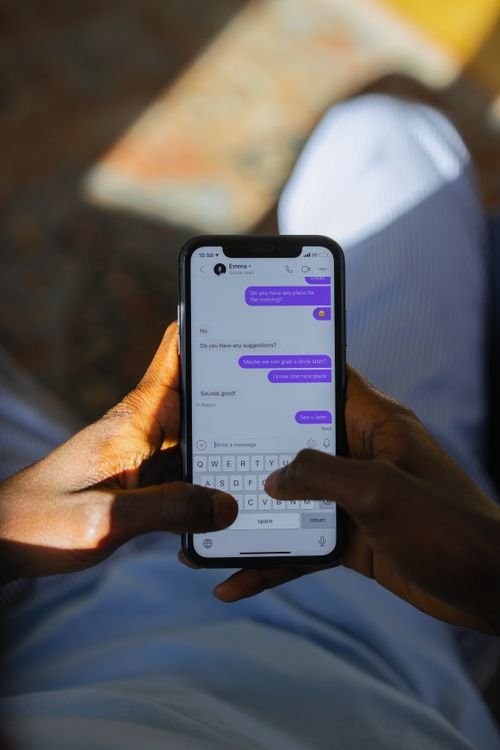
Picture this: you’re on a roof, under a sink, or mid-clean with gloves on, and your phone rings in the truck. By the time you check it, the caller is gone. These missed call text back templates are the text that goes out instead — automatically, while you’re still on the tools, if you set up a missed-call text-back.
Emergency calls (HVAC, plumbing, electrical)
Urgency is the entire game here. The caller needs to know they’re not being ignored and that a real human will call back soon. That’s exactly what these missed call text back templates are built to do.
Hi, this is [Your Business] — sorry we missed your call! Our techs are on jobs right now, but we’ll call you back within [30/60] minutes. Is this urgent? Reply YES and tell us what’s happening so we can prioritize you.
Why it works: the “Reply YES” question sorts real emergencies from routine calls, and naming a callback window is a promise you can actually keep.
Booking and scheduling (any trade)
The caller’s question is simple: when can someone come out? Don’t make them wait for that answer. The missed call text back templates below answer it in a single text.
Sorry we missed you! This is [Your Business]. We’re in the middle of jobs and can’t pick up right now — but we have openings [this week/Tuesday afternoon]. Want me to hold a slot? Just reply with the service you need.
Why it works: offering a specific window (“Tuesday afternoon”) feels real in a way “we have availability” doesn’t. The question moves them toward booking instead of browsing.
Estimates and quotes (landscaping, remodeling, large jobs)
Estimate-seekers are comparison shopping. Your job is to keep them talking to you instead of calling the next company on the list. Use these missed call text back templates to stay first in line.
Hi — sorry we missed your call! This is [Your Business]. We do free estimates and I’d love to get you one. Can you send a couple of photos of the [yard/space/project] so we can give you a ballpark before we visit?
Why it works: asking for photos is easy to answer and keeps the conversation in your text thread. It also gives you enough to scope the job before you spend an hour on-site.
Cleaning and recurring services
Repeat-business trades live on reliability. The text-back should sound organized, not overwhelmed. These missed call text back templates do exactly that.
Sorry we missed you! This is [Your Business]. Thanks for calling — can you tell us what service you need and your preferred day? We’ll confirm a slot today.
Why it works: it promises same-day confirmation, which is exactly what a caller comparing cleaning companies wants to hear.
After-hours calls
Most missed calls happen when you’re closed. Don’t pretend someone is reading the message right now. The after-hours missed call text back template below is honest about that.
Thanks for calling [Your Business] — we’re closed right now, but we got your message. We’ll call you back first thing [tomorrow morning/Monday]. If it’s urgent, reply URGENT and describe the issue.
Why it works: honesty about being closed, a concrete callback promise, and a pressure valve for genuine emergencies. See our guide on handling missed calls when you’re on the job for the full after-hours playbook.
When should the text go out?
Timing rules matter as much as wording. Get these right and the templates above do their job. Get the timing wrong and even the best missed call text back templates lose to a faster competitor.
Send it immediately. GoHighLevel’s Missed Call Text Back feature sends the text automatically a few seconds after a missed call — that’s the vendor’s own wording, and it matters. A caller who gets a text before they’ve even put their phone down is still thinking about you. A caller who hears from you an hour later has already booked someone else. The feature is turned on by default in the sub-account under Settings → Business Profile, and the message is fully customizable, so any of the templates above can be pasted straight in.
One text, not a sequence. The auto text-back opens the conversation; it doesn’t carry it. If they reply, that’s a live conversation in your inbox — a person (or a workflow) picks it up from there. Don’t stack three automated follow-ups on top of the first text. One automated message, then human hands.
Keep it short. Your text should be readable in one glance at a locked phone screen. Two to three short sentences plus the question is the sweet spot. If it needs a paragraph to explain, rewrite it.
If you want the mechanics of the feature in full, our GoHighLevel review covers the platform’s answering and messaging tools. You can check GoHighLevel’s current plans — the missed-call text-back toggle lives at sub-account level, and GoHighLevel doesn’t publish any per-plan restriction on it, so it’s available across their plans, which start at $97/month.
What should you never promise in a text-back?
A text is a written record. Don’t promise anything you can’t deliver, because the customer will quote it back to you.
- Never promise an exact arrival time. “We’ll be there at 2 PM” in writing becomes a dispute at 2:20. Promise a callback window instead.
- Never quote a price in the auto text. Templates that invite a quote request are fine; a template that says “water heaters from $499” locks you into a number for a job you haven’t seen.
- Never claim someone is available right now. “An agent is standing by” when nobody is will be found out in one reply.
- Never use medical, safety, or legal language you can’t back. For electrical and plumbing especially: don’t text “this sounds safe” or diagnose the problem. Ask what’s happening, promise a callback, leave the diagnosis to the visit.
What if a text-back isn’t enough?
Some businesses get enough missed calls that a text alone won’t cut it. Two routes are worth knowing. The first is an automated, always-on version of the missed call text back templates above.
GoHighLevel’s text-back handles the moment after a missed call — the caller gets a text, replies land in the unified conversations inbox, and a human or an automated workflow takes over from there. That covers most small shops. (Note: GoHighLevel is priced per sub-account — $97, $297, or $497 per month as of our October 28, 2026 check — with usage-based costs for phone numbers and SMS on top, so factor that in.)
The other route is answering the call in the first place. Rosie AI is a 24/7 AI answering service: it picks up the call itself rather than texting after a miss, and on its Scale plan and above it can send texts to callers during the call — directions, booking confirmations, appointment links. Professional starts at $49/month with 250 minutes; Scale is $149/month with 1,000 minutes. Rosie also sends email and text notifications for every call on all plans. We cover Rosie’s answering depth in our Rosie AI review and tested both services head-to-head in our AI receptionist test calls. If you’re weighing answering versus text-back for your shop, you can see Rosie’s current plans.
What about opt-outs and compliance?
Automated texts have rules, and “we’re a small business” isn’t an exemption.
- Include an opt-out path. Your first automated text to a new number should include opt-out language — something like “Reply STOP to opt out.” Once someone opts out, don’t text them again from that system.
- Check your carrier registration. US carriers require businesses to register for A2P 10DLC messaging before sending automated texts. This isn’t stated on GoHighLevel’s pricing page — it’s carrier policy — but skipping it gets your messages filtered or blocked. Check your registration before you turn the feature on.
- Keep a record. Your messaging platform logs what was sent and when. If a customer ever disputes a text, the log is your evidence.
The compliance side is unglamorous, but one blocked number or one complaint costs more than an afternoon of setup.
The bottom line
These missed call text back templates earn their keep with three lines: sorry we missed you, one concrete promise, one easy question. Pick the template that matches the caller’s situation, send it within seconds of the miss, never promise a time or price in writing, and give every text an opt-out. Set it up once and it works while you’re on the tools — which is exactly the point.
Related: Who answers when you’re on a job? Missed-call options for small trade crews