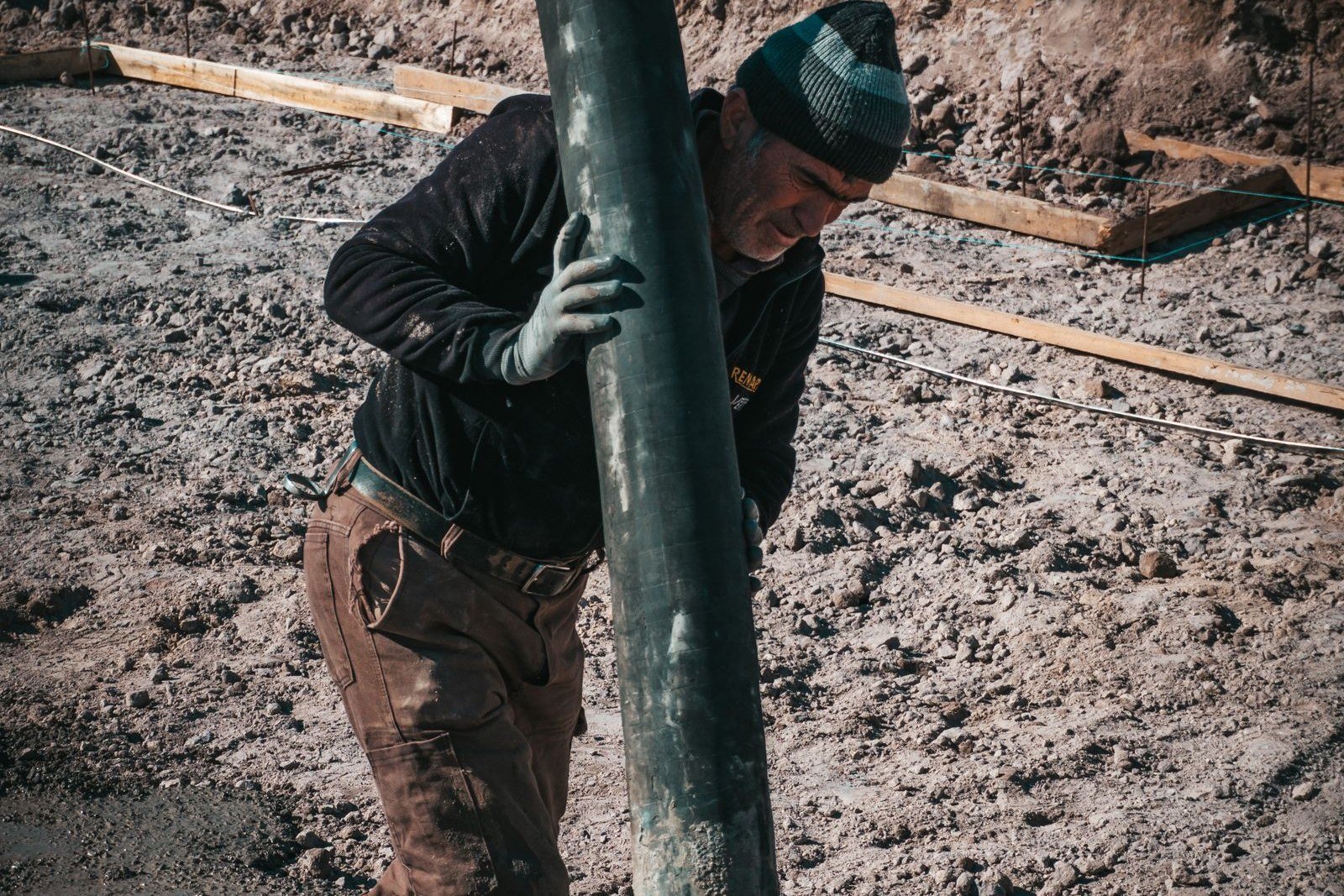
How much concrete do you need for a slab, footing or fence posts? Enter the dimensions to calculate cubic yards and the number of bags needed based on manufacturer yields. You can also switch to metric.
Calculate concrete needed
Calculated from your inputs. Bag counts round up.
See how this was calculated
| Net volume | — |
| Waste allowance | — |
| Total volume | — |
| Bags (rounded up) | — |
| Total weight | — |
Volume = length × width × (thickness ÷ 12) × (1 + waste%). Cubic yards = cubic feet ÷ 27. Bags = volume ÷ bag yield, rounded up.
How to read your result
A 10 × 10 ft slab, 4 in thick, 5% waste, 80 lb bags:
- Net: 10 × 10 × (4 ÷ 12) = 33.33 cu ft
- With waste: 33.33 × 1.05 = 35 cu ft = 1.30 cu yd
- Bags: 35 ÷ 0.60 = 58.3 → 59 bags = 4,720 lb
These are example numbers to show the math. Enter your own slab dimensions above.
Which trades is this for?
For concrete and hardscape trades ordering by the cubic yard or mixing bags on-site.
- Concrete contractors: slabs, driveways and foundations.
- Landscapers: patios, walkways and footings.
- General contractors: small pours, repairs and additions.
- Masons: footings and structural work.
Assumptions & limits
- Bag yields are based on manufacturer specifications: 80 lb ≈ 0.60 cu ft, 60 lb ≈ 0.45 cu ft, 40 lb ≈ 0.30 cu ft. Actual yields can vary slightly depending on the mix and how it’s prepared.
- The sub-base isn’t included in concrete volume. Gravel base, forms and rebar/wire are separate. This calculator only measures the concrete needed.
- Order 5–10% extra to cover spills, over-excavation and form blowouts. Use the waste field to account for it.
- Need 45+ bags? Consider calling a ready-mix supplier. At that volume, a truck is usually cheaper per yard and takes much less labour.
Common questions
How many 80 lb bags of concrete are in a cubic yard?
About 45. A cubic yard contains 27 cubic feet, and an 80 lb bag yields about 0.60 cu ft. That works out to 27 ÷ 0.60 = 45 bags. The concrete calculator uses the same calculation for your volume and rounds up.
When should I order ready-mix instead of bags?
A useful rule is 45+ bags (about a cubic yard). At that point, a truck is usually cheaper per yard and saves hours of mixing. Ready-mix also provides more consistent strength for structural work.
How thick should a concrete slab be?
4 inches is standard for patios, walkways and shed floors. Driveways and garage floors usually need 5–6 inches. Anything carrying heavy loads needs engineering, which this calculator doesn’t cover.
Why add waste to a concrete order?
Forms can flex, sub-bases aren’t always level, and spills happen. Adding 5–10% helps avoid a second trip. Running short can cost more in time than buying a few extra bags.
Related free tools
Take this further
Disclosure: TradeProStack is reader-supported. The links below are affiliate links — if you buy through them, we may earn a commission at no extra cost to you. Placement here never changes our reviews or scores.
Add materials, labour and markup into one estimate the customer can approve on the spot.
Try WorkizRead our Workiz review