
A flat-rate HVAC quote can look profitable on paper and still leave less money than the owner expected. That happens often on fixed-price changeouts, where the price comes from the price book and the margin is assumed rather than checked. The usual cause is a simple pricing habit: add a percentage to the job cost and call it the margin. The arithmetic is easy, but the percentage it produces is usually lower than intended. A markup vs margin calculator for HVAC separates those two calculations, so the price you quote matches the share of the selling price you actually want to keep.
All figures in this guide are illustrative: they show how the calculation works, not market prices and not a quote for a real property. The calculator itself is free, runs in the browser, and needs no signup.
Why do flat-rate HVAC changeouts get underpriced?
Take a 3-ton air conditioning changeout, quoted from the price book, where the shop totals the cost and adds a percentage. If the owner wants a 35% margin, adding 35% to the cost feels like the right move. It is not. Adding 35% to cost produces a 35% markup, which is a different number from a 35% margin. Markup measures profit against what the job costs. Margin measures profit against what the customer pays. The same dollars of profit give different percentages depending on which number sits underneath.
On one changeout the gap is several hundred dollars. Across a cooling season of similar changeouts, it is the difference between a shop that covers its costs and a shop that quietly works for less than it planned. That is why the check matters most on the changeouts you quote most often, where one wrong percentage gets copied into every quote.
What is the difference between markup and margin?
Markup is profit relative to your cost. Margin is what remains of the final selling price as gross profit after the cost is subtracted. The calculator uses two formulas:
Margin mode: selling price = cost divided by (1 minus margin)
Markup mode: selling price = cost multiplied by (1 plus markup)
Gross profit is the same in both cases: selling price minus cost. Markup is gross profit divided by cost. Margin is gross profit divided by selling price.
The classic illustration is a $100 cost. Add a 30% markup and the price is $130, with $30 of profit. That $30 is 30% of the $100 cost, but only 23.1% of the $130 price. To keep 30% of the selling price, the price would need to be $142.86. Neither calculation is wrong on its own. The error is choosing one while expecting the other.
The inputs, in HVAC terms
The markup vs margin calculator for HVAC asks for two things: the job cost and the percentage you want to hit. Both need care.
Job cost. Everything the job consumes: equipment at wholesale, materials, labour, subcontractors, and permit and disposal fees, built from the actual job rather than a round number. Labour means loaded labour, the true hourly cost with vehicle, insurance, and overhead folded in, not the wage on the pay stub. If you have not worked out your loaded rate, the fully loaded labour rate calculator walks through it.
Target percentage, and which mode. Choose margin mode when you want a share of the selling price, the usual goal for a flat-rate quote, since the margin has to cover overhead and leave a profit. Choose markup mode only when deliberately adding a percentage to cost, for example marking up a part on a time-and-materials repair. The calculator shows both results either way.
What the result does not include. Prices exclude sales tax, which goes on top of the selling price, and overhead is not part of this math either. The margin you target has to be big enough to cover it, so the target percentage is a business decision, not a number the calculator picks for you.
Worked example: a 3-ton AC changeout
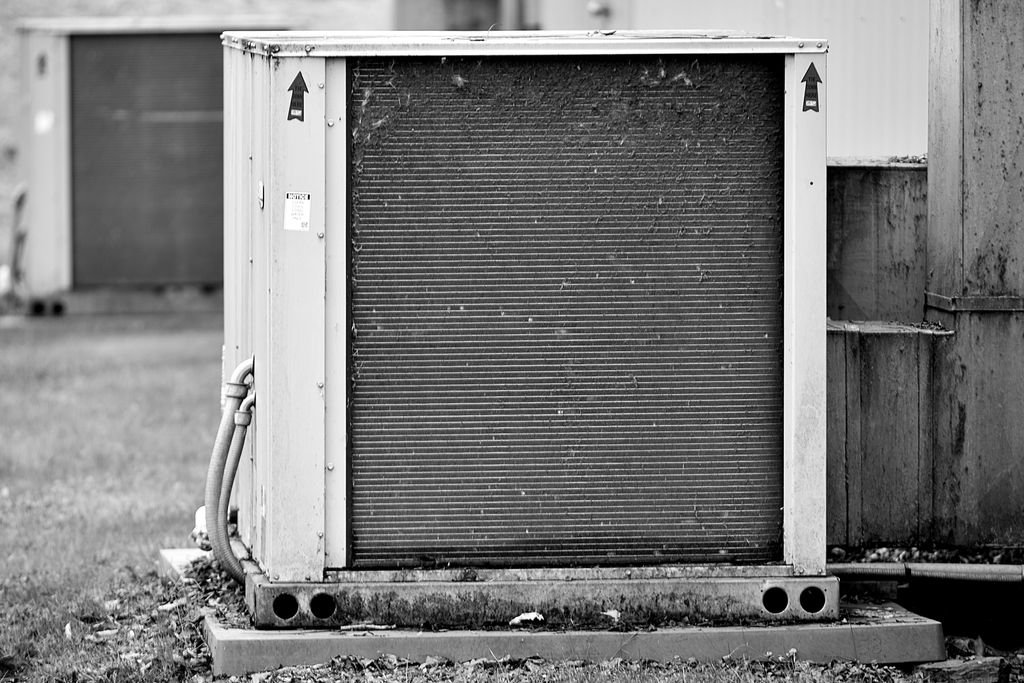
A homeowner asks for a 3-ton condenser and evaporator coil replaced, quoted flat-rate from the price book. Here is the cost:
Equipment, condenser and coil at wholesale: $2,400
Materials, line set, pad, disconnect, refrigerant, and miscellaneous fittings: $450
Labour, 8 hours at a loaded rate of $95 an hour: $760
Permit and disposal and recycling of the old unit: $210
Total job cost: $3,820
The owner wants a 35% margin on the job. In margin mode:
Step 1, selling price: $3,820 divided by (1 minus 0.35), which is $3,820 divided by 0.65, gives $5,876.92.
Step 2, gross profit: $5,876.92 minus $3,820 gives $2,056.92.
Step 3, the markup on that price: $2,056.92 divided by $3,820 gives 53.8%. To keep 35% of the selling price, the markup has to be 53.8%, not 35%.
Now compare with the habit this guide is about. Quote the same changeout at 35% markup instead:
Selling price: $3,820 multiplied by 1.35 gives $5,157.00.
Gross profit: $5,157.00 minus $3,820 gives $1,337.00.
Margin: $1,337.00 divided by $5,157.00 gives 25.9%, not 35%.
The shortfall is $719.92 on this one job: $5,876.92 minus $5,157.00. Run the same mistake on 6 changeouts a month and it costs $4,319.52 a month. Over 72 changeouts a year, it costs $51,834.24. That is the price of treating a markup as a margin on a weekly job.
Check the same numbers in the markup vs margin calculator for HVAC: enter $3,820 as the cost and 35% as the target, first in margin mode and then in markup mode, and the two selling prices come back as $5,876.92 and $5,157.00.
What the result changes for an HVAC shop
Run through a markup vs margin calculator for HVAC, the worked example answers two decisions an HVAC shop makes every week.
First, what to quote. For a repeatable flat-rate changeout, the margin-mode price is the quote. Once the cost build is set, the calculator turns any margin target into a price in seconds, so the quote stays consistent whoever in the shop prepares it. If the cost changes, a more expensive coil, a longer line set, a second visit, the price moves with it instead of staying frozen. The job quote calculator guide for HVAC covers the wider quoting side of the same changeout, including how the quote itself is built and presented.
Second, whether the price book already hits the target. A price-book price can be checked the other way round: enter the book price and the job cost, and the margin falls out. Suppose the book lists this changeout at $5,600. On the same $3,820 cost, the profit is $1,780 and the margin is $1,780 divided by $5,600, which is 31.8%. That is below the 35% target. To hit 35%, the book price needs to be $5,876.92, the same figure the worked example produced. A book price that looked fine is $276.92 short of the target on every changeout.
That reverse check is worth running across the changeouts you quote most: a book built when equipment prices were lower, or labour was costed at the wage rather than the loaded rate, drifts below target quietly. The calculator gives you the margin on each book price, so the fix is a price change you can defend, not a guess.
Video: HVAC Sales Academy on markups vs profit margin for HVAC businesses (4:56).
Common input mistakes
Most of them come back to one habit: entering a cost that is not the true cost into the markup vs margin calculator for HVAC.
Costing labour at the wage. The most expensive mistake on this calculator. In the worked example, the labour is 8 hours at a loaded $95 an hour, which is $760. Cost the same 8 hours at a $55 wage and the labour falls to $440, the apparent cost falls to $3,500, and the apparent price at a 35% margin is $5,384.62. That looks like a $1,884.62 profit. The true cost is still $3,820, so the true profit on a $5,384.62 price is $1,564.62 and the true margin is 29.1%, not 35%. The $320.00 difference is overhead the quote never collected.
Forgetting the permit and the disposal. Leave the $210 permit and disposal out and the cost looks like $3,610. The price at a 35% margin comes out as $5,553.85. The true profit is $1,733.85 and the true margin is 31.2%, because the $210 still has to be paid. Small fees are the easiest costs to forget and the hardest to absorb: they come straight out of the margin.
Pricing the whole job on markup. Markup is fine for a quick check on a part, but pricing a whole flat-rate changeout on markup alone leaves the margin short every time, as the worked example shows: 35% markup gave a 25.9% margin. If the shop’s target is a share of the selling price, price in margin mode.
Chasing a margin the market will not pay. The calculator will price any target, including one no customer will accept. If the margin-mode price comes back far above the going rate, the answer is a lower cost, a different supplier, or a job you decline, not a higher target. The calculator shows the trade-off; it cannot make the market accept the price.
Frequently asked questions
Should an HVAC shop price jobs on markup or margin?
Margin, for a flat-rate quote: it tells you what share of every dollar you charge you keep, which has to cover overhead and leave a profit. Markup is useful for a quick calculation on materials, but pricing a whole job on markup alone can leave you charging too little.
Why does a 30% markup not give a 30% margin?
Because margin divides by the bigger number. A $100 cost plus a 30% markup is a $130 price. The $30 profit divided by the $130 price is a 23.1% margin. To keep 30% of the price, you would need to charge $142.86.
What margin should an HVAC shop target?
There is no single right number: it depends on your overhead, your market, and the job. Work out your true hourly cost first, then set a margin that covers overhead with profit left over. The labour rate calculator guide for HVAC walks through the loaded-rate side of that calculation.
Does the calculator include sales tax?
No. Prices exclude sales tax: add GST or HST, or state sales tax, on top of the selling price.
Photos: José Andrés Pacheco Cortes and Jay Brand via Pexels.
Price your next flat-rate changeout on margin, not markup
Enter the job cost and your target margin in the free markup vs margin calculator and get the selling price, the gross profit, and the markup in one pass. No signup, runs in your browser.